Frequently Asked Questions About Whiskey Aging Barrels
Is a new oak barrel better than a used barrel for aging whiskey?
A new oak barrel is not automatically better, but it delivers stronger and faster flavor extraction. Used barrels provide a gentler, slower maturation. The right choice depends on your desired whiskey style, aging timeline, and flavor goals.
Why does bourbon require new oak barrels?
By law, bourbon must be aged in new charred oak barrels. This requirement ensures bold vanilla, caramel, and toasted oak flavors that define the classic bourbon profile.
Can whiskey be aged too long in a new oak barrel?
Yes. Especially in smaller barrels, extended aging in new oak can result in excessive tannins, bitterness, and over-oaked flavors. Careful monitoring is essential.
What types of whiskey use used barrels?
Scotch, Irish whiskey, and many world whiskeys commonly use used barrels, often ex-bourbon casks, to achieve smoother and more balanced maturation over longer periods.
Do used barrels still add flavor to whiskey?
Yes, but more subtly. Used barrels contribute gentle oak notes, oxidation, and sometimes secondary flavors from the previous fill, rather than strong wood-driven intensity.
Can you combine new and used barrels in whiskey aging?
Many distillers age whiskey first in new oak barrels and then transfer it to used barrels for finishing. This approach balances structure, sweetness, and long-term refinement.
Does barrel quality matter more than barrel age?
Absolutely. A well-made barrel from quality oak will outperform a poorly constructed barrel regardless of whether it is new or used.
What oak barrels does BarrelsWood offer for whiskey aging?
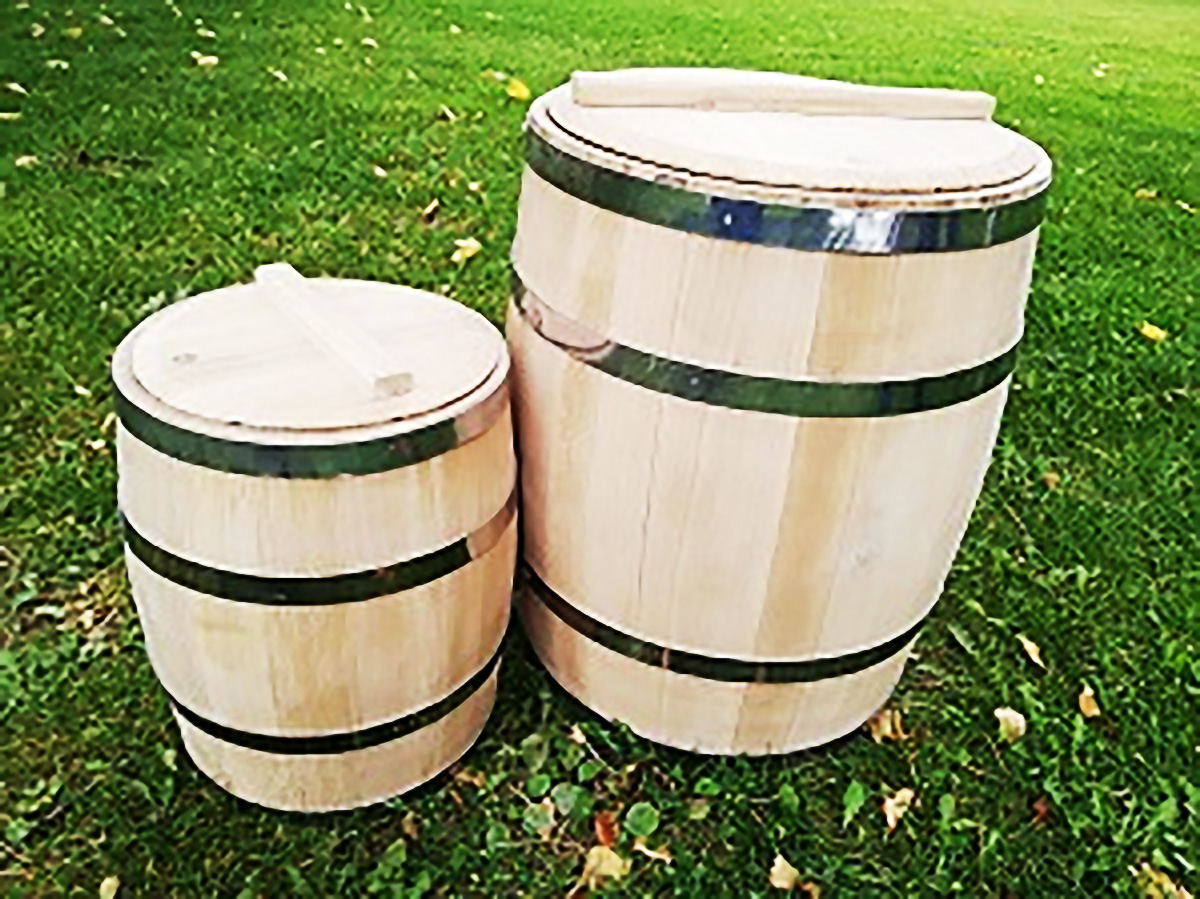
BarrelsWood offers food-safe Canadian oak barrels suitable for aging whiskey, spirits, and experimental small batches. Our barrels are crafted using traditional cooperage methods for consistent results.
Choosing the right barrel for aging whiskey is one of those decisions that looks simple on the surface, but quickly becomes complex once you understand how much influence oak has on the final spirit. For many distillers and small-batch producers, the main question comes down to this: should you age whiskey in a new oak barrel or a used barrel?
At BarrelsWood, we work with both professional distilleries and independent producers, and this is one of the most common conversations we have. The truth is, there is no universally “better” option. The right choice depends on your goals, your aging timeline, and the style of whiskey you want to create.
Why oak barrels matter so much in whiskey aging
Whiskey leaves the still clear, sharp, and incomplete. The barrel is where it becomes recognizable as whiskey. During aging, oak barrels influence flavor, aroma, color, and mouthfeel through extraction, oxidation, and evaporation.
Oak contributes compounds like vanillin, tannins, lactones, and toasted sugars. At the same time, oxygen slowly enters the barrel, softening alcohol edges and helping flavors integrate. How fast and how intensely this happens depends largely on whether the barrel is new or already used.
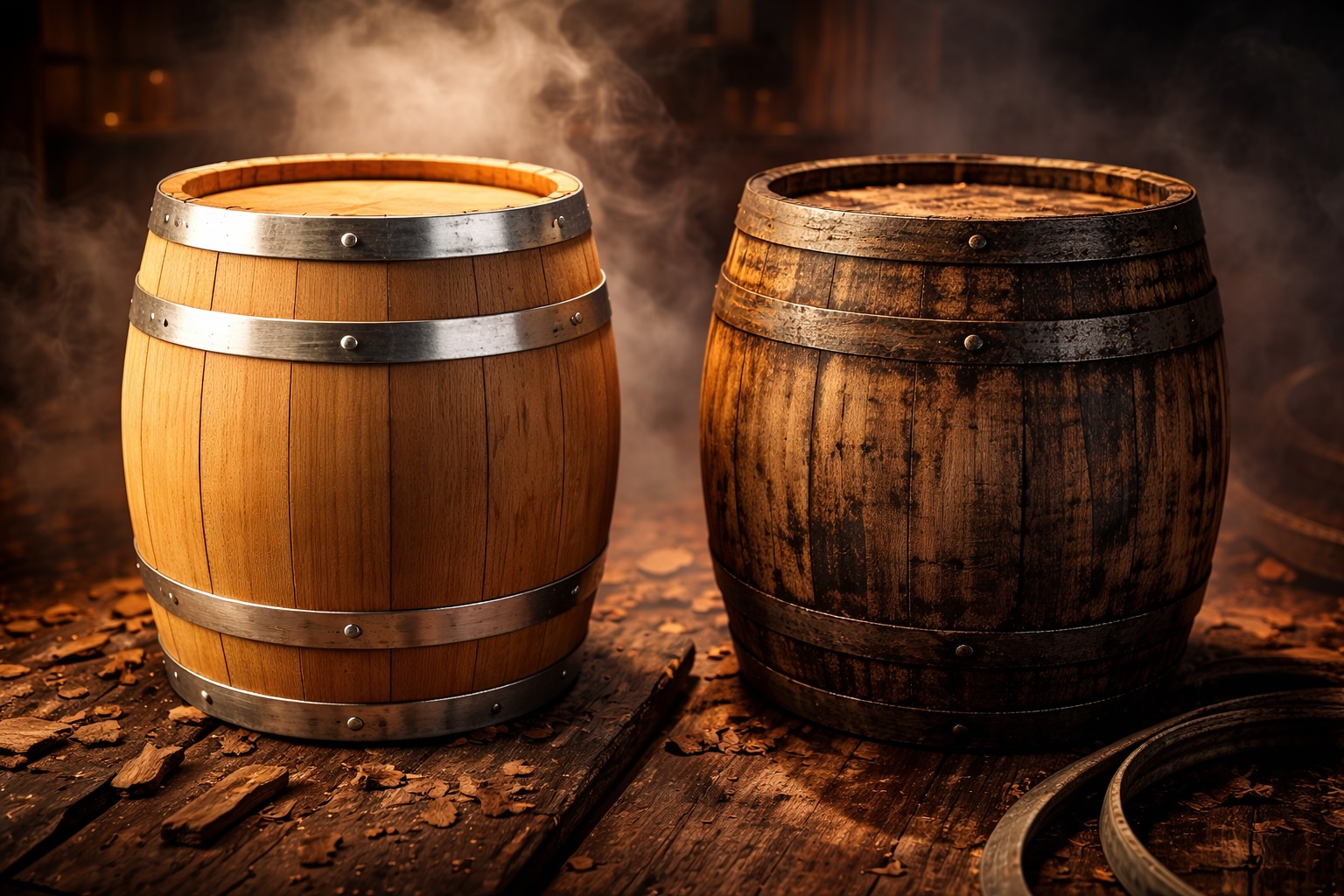
What is a new oak barrel?
A new oak barrel is one that has never been used to age any liquid before. In American whiskey production, new barrels are typically charred on the inside, creating a layer of caramelized wood sugars and activated carbon.
By law, bourbon must be aged in new charred oak barrels, which shows just how central new oak is to certain whiskey styles. The fresh wood surface delivers strong and immediate interaction with the spirit.
How new oak affects whiskey flavor
New oak barrels have a powerful influence, especially during the first years of aging. Common flavor notes include vanilla, caramel, honey, coconut, toasted sugar, and spice. Depending on the char level, you may also get smoky or roasted characteristics.
This intensity can be a major advantage, particularly for younger whiskeys that need structure and depth early on.
Advantages of aging whiskey in new oak barrels
- Faster flavor development compared to used barrels
- Strong color extraction, even at shorter aging times
- Bold, recognizable oak-driven profile
- High consistency between barrels when sourced correctly
For craft distillers and small producers, new oak barrels can reduce time to market while still delivering a full-bodied whiskey.
Potential risks of new oak
That same intensity can also become a drawback. Whiskey aged too long in new oak—especially in smaller barrels—can become over-oaked, overly tannic, or unbalanced. The oak may overpower the character of the distillate instead of supporting it.
This is why careful barrel size selection and aging monitoring are essential when working with new oak.
What is a used barrel?
A used barrel, sometimes called a refill or seasoned barrel, has already held another liquid. Most commonly, this means bourbon barrels reused for Scotch or other whiskeys, but it can also include barrels previously used for wine, rum, or other spirits.
Once a barrel has been used, many of its most aggressive oak compounds have already been extracted, resulting in a gentler interaction during subsequent aging.
How used barrels shape whiskey
Used barrels allow the base spirit to remain more visible. Instead of dominating the flavor, the oak acts as a framework, helping the whiskey mature slowly and evenly.
In addition to softer oak influence, used barrels may contribute subtle secondary notes from their previous fill, adding complexity rather than intensity.
Advantages of used barrels
- More balanced and nuanced maturation
- Lower risk of excessive tannins
- Well suited for long-term aging
- Greater focus on distillate character
This is why most Scotch and Irish whiskeys rely heavily on used barrels rather than new oak.
Limitations of used barrels
The main trade-off is time. Used barrels work more slowly, which means longer aging periods before the whiskey reaches maturity. Barrel quality can also vary significantly, making proper sourcing and inspection critical.
A poorly maintained used barrel can result in flat or inconsistent whiskey.
New oak vs used barrel: a practical comparison
When choosing between new and used barrels, it helps to think in terms of intent rather than preference.
- New oak barrels deliver strong flavor quickly and are ideal for bold, oak-forward whiskey styles.
- Used barrels provide restraint, balance, and refinement over longer aging periods.
Neither option is inherently superior. They simply produce different results.
Which barrel should you choose for your whiskey?
If you are producing a bourbon-style whiskey, or a young craft release that needs immediate character, new oak barrels are often the right starting point. They provide structure, sweetness, and color in a relatively short time.
If your goal is a refined, elegant whiskey designed for extended aging, used barrels are usually the better option. They allow complexity to develop gradually without overwhelming the spirit.
Many modern distillers take a hybrid approach, aging whiskey initially in new oak and then transferring it to used barrels for finishing. This method combines structure with finesse and offers greater control over the final profile.
Quality matters more than barrel type
Regardless of whether you choose new or used barrels, build quality and materials are critical. Poorly constructed barrels can cause leaks, contamination, or uneven aging.
At BarrelsWood, our oak barrels are made using traditional cooperage methods, food-safe materials, and carefully selected Canadian oak. Whether you are aging whiskey, fermenting, or experimenting with small batches, barrel reliability is just as important as barrel type.
Final thoughts
The choice between a new oak barrel and a used barrel is not about following trends or copying other producers. It is about understanding how oak interacts with your spirit and choosing the tool that supports your vision.
New oak brings power and speed. Used barrels bring balance and patience. The best results come from knowing when—and how—to use each.
If you are exploring barrel options for whiskey aging or looking for consistent, high-quality oak barrels, you can browse our oak barrel selection or contact us for guidance tailored to your production goals.