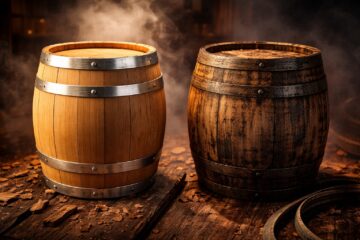
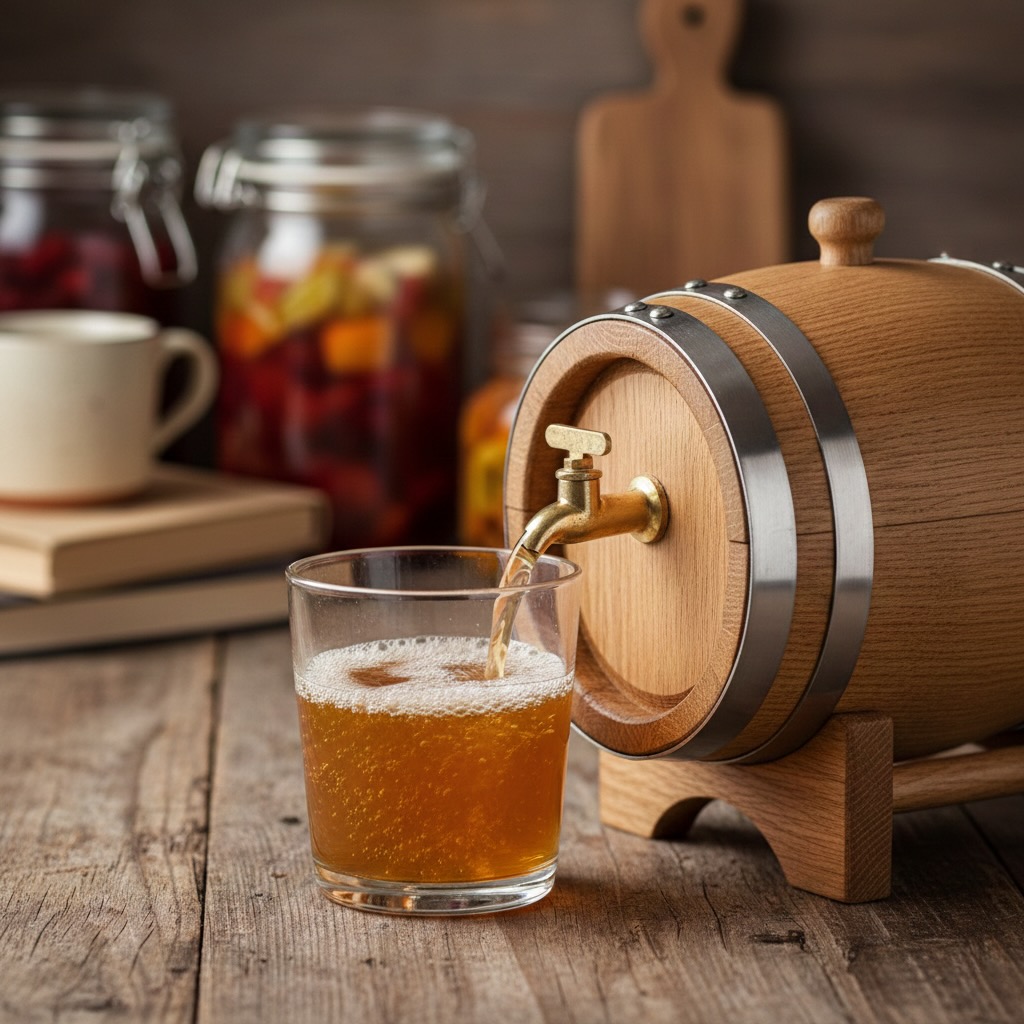
The secret isn’t in a new tea blend or a fancy fruit infusion—it’s in the vessel itself. Across North America, artisanal brewers and health-conscious entrepreneurs are ditching the glass and returning to the “living” tradition of oak barrel fermentation. Here is why aging your kombucha in Canadian oak is the ultimate game-changer for both flavor and fizz.
1. The Science of the “Living” Ecosystem
Kombucha is a delicate dance between bacteria and yeast (your SCOBY). In a non-reactive vessel like glass, these microbes are essentially trapped. Oak, however, is porous. It allows for a process called micro-oxygenation, where minuscule amounts of air pass through the wood staves.
This isn’t just “breathing”—it’s a survival boost for your culture. The wood pores provide a physical habitat where beneficial bacteria and yeast can take up residency, leading to a much more stable and consistent fermentation environment over time. In fact, many brewers find that their SCOBY actually grows into the sides of the barrel, creating a thriving, self-balancing ecosystem that produces a deeper range of organic acids.
2. Smoothing the Sharpness: Flavor Profiles You Can’t Get in Glass
The biggest complaint about home-brewed kombucha is the “vinegar punch.” Oak barrels naturally solve this. As the tea ferments, the wood imparts natural tannins, vanillins, and buttery notes that mellow the sharp acetic acid.
If you use a barrel with a medium char, like those crafted by BarrelsWood, the wood acts as a natural charcoal filter, removing undesirable impurities while adding complex woody and smoky characteristics. The result is a “booch” that is sophisticated, dry, and balanced—reminiscent of the depth found in barrel-aged spirits or chardonnay.
3. That Professional “Champagne” Fizz
Ever wonder why store-bought kombucha has that perfect, tiny-bubble carbonation while home batches can sometimes feel flat or explosively fizzy? Oak-aged kombucha tends to have a tighter, more refined effervescence. Because the wood allows the yeast to work more efficiently without being “suffocated,” the secondary fermentation happens more predictably. When you bottle straight from the barrel’s spigot, you’re starting with a liquid that is already structurally superior for natural carbonation.
4. The Magic of Continuous Brewing
A barrel is the perfect home for a Continuous Brew (CB) system. Instead of cleaning your jar and starting from scratch every week, you simply draw off what you need from the spigot and top it up with fresh sweet tea.
- Consistency: The mature kombucha stays in the barrel, balancing the new tea instantly.
- Health: The longer fermentation times possible in a CB system allow for the formation of rare acids (like gluconic acid) that don’t even appear until day 14 or 21—acids that are key to the drink’s detoxifying reputation.
5. Why the Source Matters (Safety & Purity)
Not all barrels are created equal. Since kombucha is highly acidic (low pH), it can leach chemicals from a vessel if it isn’t food-grade. Many decorative barrels use glue, wax, or varnish on the inside to prevent leaks—things you definitely don’t want in your gut-health drink.
This is where BarrelsWood.com stands apart. Their Canadian-made oak barrels are built for real fermentation, using traditional cooperage techniques that explicitly avoid interior waxes, paints, or glues.[1] Every barrel is made from premium Canadian oak with stainless or coated hoops, ensuring that your kombucha only ever touches pure wood and food-safe metal.[1]
Frequently Asked Questions
How does oak change the flavor compared to glass?
Unlike glass, which is inert and non-reactive, oak is a “living” vessel. It imparts natural tannins and aromatic compounds like vanilla and earth while smoothing out the sharp “vinegar” bite. This results in a softer, more complex flavor profile that standard fermentation methods can’t achieve.
Are BarrelsWood barrels safe for high-acid ferments like kombucha?
Absolutely. Safety starts with construction. BarrelsWood follows traditional cooperage practices, using only carefully selected Canadian oak and food-safe stainless or coated metal hoops.[1] We intentionally avoid interior waxes, paints, or glues that could leach chemicals into your acidic brew.[1]
How do I prevent mold from growing in a wooden barrel?
The best defense is keeping your barrel full of kombucha at all times. The naturally low pH and organic acids of a healthy ferment are antimicrobial. Additionally, the micro-oxygenation through the wood staves helps the culture maintain a dynamic microbial ecosystem that deters mold and contamination.
How long should I age my kombucha in the oak barrel?
Typically, 2 to 4 weeks is the sweet spot for flavor infusion. Smaller barrels (like our 3L or 5L models) work faster because they have a higher surface area-to-volume ratio, allowing the tea to absorb oak characteristics more quickly than in large commercial casks.
Do I need to clean the barrel between every batch?
If you are using a Continuous Brew system, you do not need to do weekly cleaning. In fact, handling the SCOBY less often reduces the risk of outside contamination. If you are switching flavor profiles or storing the barrel long-term, a simple rinse with warm water is usually sufficient to maintain its integrity.
Ready to Upgrade Your Brew?
Whether you’re a hobbyist looking for a 3-liter countertop barrel or a small business scaling up with a 20-liter or 225-liter workhorse, the move to oak is an investment in your health and your palate.
Stop just fermenting tea—start aging a masterpiece. Explore the full range of handcrafted, food-safe kombucha barrels at BarrelsWood.com and taste the difference that real Canadian craftsmanship makes.