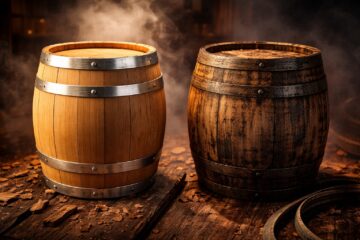
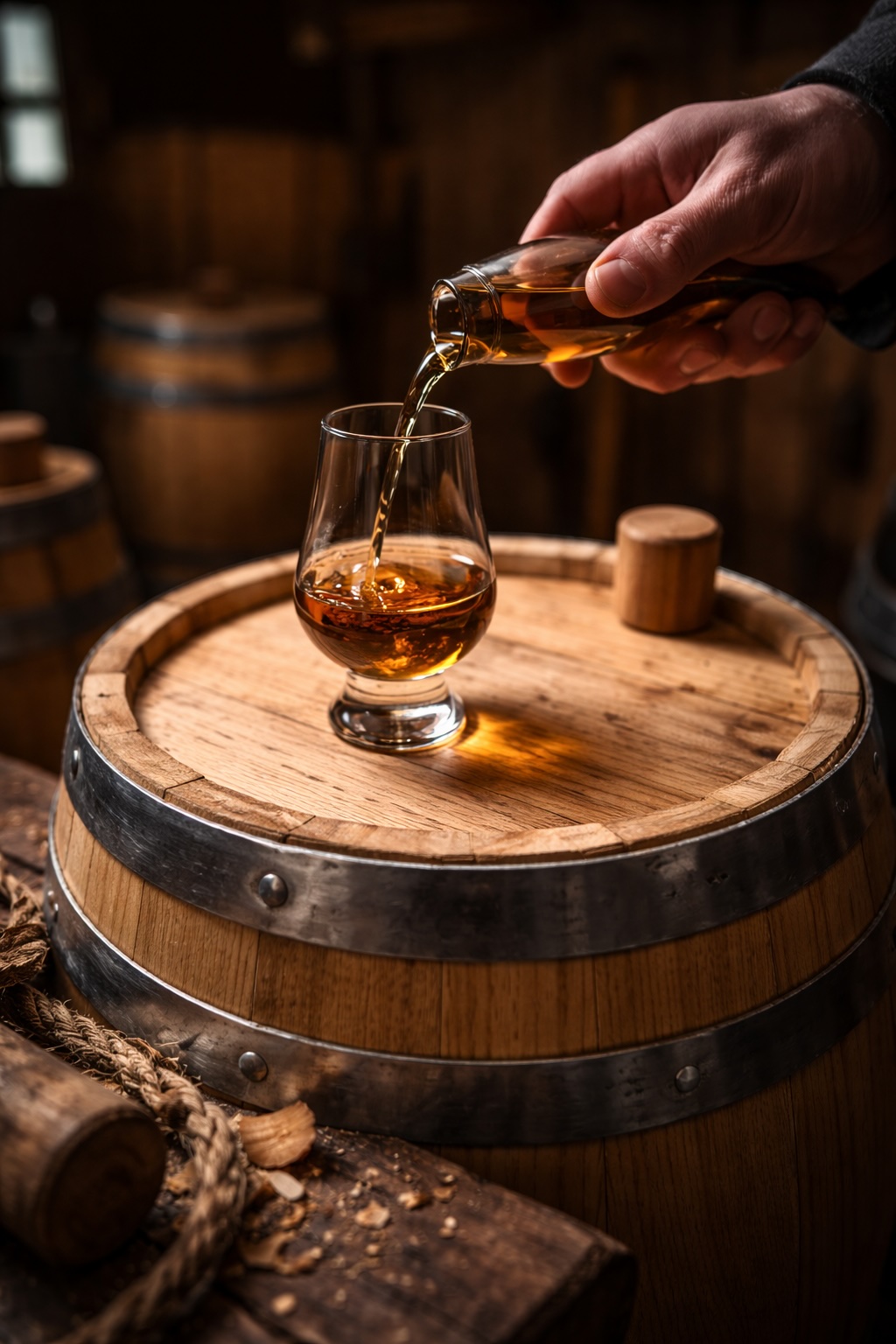
This guide explains proven methods used by distillers, craft producers and cooperages to soften new oak influence while keeping all its benefits.
Why New Oak Can Taste Harsh
Fresh oak is rich in extractable compounds. When alcohol enters a new barrel, it immediately begins pulling:
- Tannins (structure and dryness)
- Lignin-derived compounds (vanilla, spice, smoke)
- Oak lactones (coconut, wood sweetness)
In a used barrel, many of these compounds have already been extracted. In a new barrel, they are all available at once. This is why new oak delivers flavor fast — and why it can easily overpower the spirit if not controlled.
Smoothness comes from balance and time, not from eliminating oak influence entirely.
Start with the Right Barrel Size
One of the most overlooked factors is barrel size. Smaller barrels have a much higher wood-to-liquid ratio, which means extraction happens faster and more aggressively.
If you are working with small volumes or experimental batches, consider the trade-offs carefully:
- 5–10L barrels extract extremely fast and require close monitoring
- 20–30L barrels offer more control and smoother development
- 50L+ barrels behave closer to traditional aging profiles
Many producers chasing smoothness choose slightly larger barrels to slow down extraction and allow oxidation to work alongside oak influence.
You can explore different formats in our oak barrel collection.
Proper Barrel Preparation Matters
A new barrel should never be filled with spirit straight out of the crate.
Correct preparation helps remove excess surface tannins and activates the wood in a controlled way:
1. Cold water swelling
Fill the barrel completely with cold water and leave it for 24–48 hours. This seals the joints and begins softening the wood surface.
2. Hot water rinse
Drain the barrel and refill it with hot water (70–80°C). Let it sit for several hours. This step removes sharp wood dust, activates lignin compounds and reduces harshness.
3. Final rinse and rest
After draining, allow the barrel to cool before filling with spirit.
This simple process dramatically improves smoothness, especially in smaller barrels.
Control Entry Proof
Alcohol strength plays a huge role in extraction behavior.
Higher proof extracts tannins and bitter compounds faster. Lower proof emphasizes sweeter, rounder oak notes.
Many producers aiming for smoothness fill new barrels at:
- 55–60% ABV for whiskey
- 50–55% ABV for rum or brandy
This allows oak character to develop without aggressive bitterness.
Time Is a Tool — Use It Carefully
New barrels work fast. This means you need to taste often.
Instead of aging blindly for months, create a tasting schedule:
- First tasting after 2–3 weeks (small barrels)
- Monthly tastings for medium barrels
- Quarterly tastings for larger formats
If oak starts dominating, you can:
- Transfer the spirit to glass
- Blend with unaged or lightly aged spirit
- Move into a used barrel for finishing
Smoothness is preserved by intervention, not neglect.
Use Blending as a Flavor Tool
Many professional distillers never rely on a single barrel.
Blending spirit aged in new oak with spirit aged in used barrels allows you to:
- Soften sharp edges
- Control wood intensity
- Create consistency across batches
This technique is especially effective for craft-scale producers working with limited volumes.
Why Barrel Quality Makes a Difference
Not all new barrels behave the same.
Grain selection, seasoning time, stave thickness and cooperage technique all affect how oak releases flavor.
At BarrelsWood, our barrels are:
- Air-seasoned for balanced extraction
- Built without interior wax, glue or coatings
- Designed for controlled aging, not decorative use
Well-made barrels are easier to tame and reward patience with smoother results.
FAQ: Getting Smooth Flavor from New Oak Barrels
Can a new oak barrel ever produce a smooth whiskey?
Yes. Smoothness depends on preparation, entry proof, barrel size and monitoring. New oak can produce rich, rounded whiskey when managed correctly.
How long should spirit stay in a new barrel?
There is no fixed timeline. Small barrels may need only weeks, while larger barrels may benefit from months or years. Regular tasting is essential.
Is it better to dilute spirit before or after aging?
Many producers dilute before aging to control extraction. Final proof adjustment is typically done after aging and blending.
Do toasted or charred barrels behave differently?
Yes. Toasting emphasizes sweetness and spice, while char adds smoke and filters harsh compounds. The choice affects how smooth the final spirit becomes.
Can I reuse a new barrel after the first fill?
Absolutely. Second and third fills are often smoother and more subtle, making reused barrels excellent for finishing or long aging.
Final Thoughts
New oak barrels are not the enemy of smooth flavor — misuse is.
When treated with respect and knowledge, a new barrel becomes a powerful partner in shaping character, depth and value. Control the variables, taste often, and let the barrel work with you instead of against you.
If you are choosing your first aging barrel or planning your next batch, explore our handcrafted oak barrels designed specifically for real-world aging and fermentation.