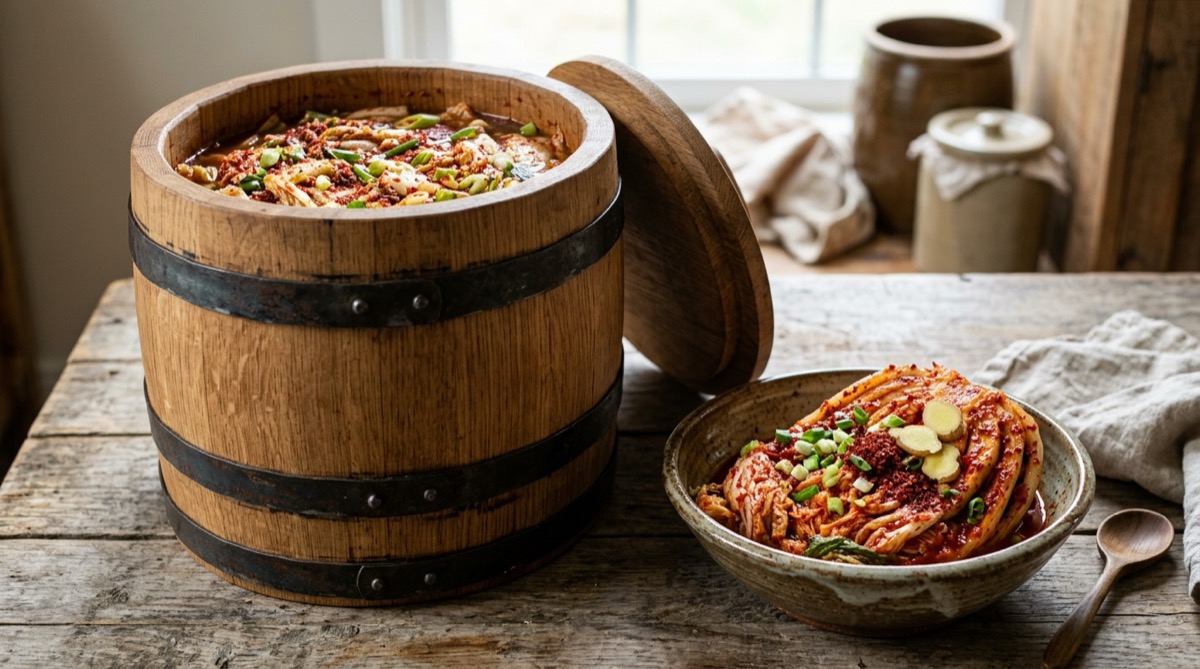
Small-batch fermentation kitchens, Korean-inspired farm stands, and homesteaders are rediscovering why uncharred open-top wooden pickle barrels outperform sealed glass jars for batching traditional Napa cabbage kimchi (Pogikimchi). In warm glass jars, carbon dioxide pressure builds rapidly while endogenous cabbage enzymes soften thick stems within weeks. Inside an uncharred Canadian white oak barrel under a weighted hardwood follower lid, CO2 vents naturally around the water-sealed rim while oak ellagitannins bind plant cell walls to keep Napa stems audibly crisp for months.
This recipe is calibrated specifically for our 5L Open-Top Canadian White Oak Pickle Barrel ($115) and scales cleanly up to 10L ($199), 20L ($220), and 30L ($255) commercial restaurant barrels.
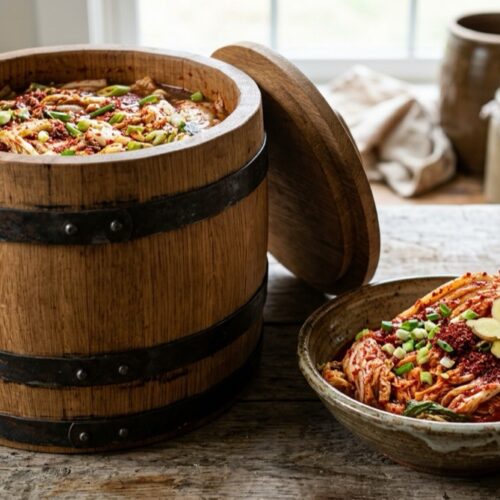
Traditional Oak-Barrel Fermented Napa Cabbage Kimchi
Equipment
- BarrelsWood 5L Open-Top Oak Pickle Barrel with Hardwood Press Lid uncharred Canadian white oak
- Clean granite or ceramic fermentation weight (1–1.5 kg) never limestone or cast iron
- Large stainless basin and food-safe gloves for salting and pasting cabbage quarters
Ingredients
- 1 BarrelsWood 5L Open-Top Canadian White Oak Pickle Barrel cured watertight with cold filtered water
- 3.5 kg fresh Napa cabbage (3 medium dense heads) 7.7 lbs — split lengthwise into quarters with core intact
- 140 g coarse Korean sea salt (cheonyeonyeom) or non-iodized sea salt 5 oz — used for initial 3–4 hour wilting, then rinsed
- 480 ml filtered water 2 cups — for sweet rice porridge binder
- 30 g sweet glutinous rice flour (chapssalgaru) 2.5 tbsp
- 20 g organic cane sugar or Asian pear puree 1.5 tbsp — feeds initial Leuconostoc lactic bacteria
- 110 g coarse Korean red pepper flakes (gochugaru) 1 cup — sun-dried mild-medium heat, never cayenne powder
- 450 g Korean radish (mu) or daikon radish 1 lb — peeled and cut into 5 cm matchsticks
- 8 stalks fresh scallions (green onions) sliced diagonally into 4 cm pieces
- 60 g minced fresh garlic cloves approx. 16 cloves
- 20 g grated fresh ginger root 2 tbsp
- 65 ml Korean salted anchovy fish sauce (myeolchi aekjeot) or white miso + tamari for vegan kimchi 1/4 cup
Instructions
- Fill the 5L uncharred BarrelsWood open-top pickle barrel with cold non-chlorinated water for 48 hours until all vertical staves seal completely tight, then drain and rinse with cold filtered water.
- Slice a 10 cm slit into the base of each Napa cabbage and gently pull apart by hand into quarters so the delicate leafy tops do not shred. Dunk each quarter in cool water, rub 140 g coarse sea salt generously between the thick white stems (less on thin leafy tips), and rest in a basin for 3.5 hours, flipping halfway until stems bend smoothly without snapping. Rinse three times in cold filtered water and drain cut-side down for 30 minutes.
- Whisk 30 g sweet rice flour and 480 ml water in a small saucepan over medium heat for 4 minutes until bubbly and translucent; stir in 20 g sugar and cool completely. Mix the cooled porridge with 110 g gochugaru flakes, garlic, ginger, fish sauce (or vegan miso-tamari), julienned radish, and scallions into a vivid red paste.
- Wearing gloves, spread seasoning paste evenly between every cabbage leaf from stem to tip, fold the outer leaf around each quarter into a neat bundle, and pack snugly cut-side up in alternating layers inside the oak barrel, pressing firmly so zero air gaps remain.
- Cover the top layer with two salted outer Napa leaves, set the fitted white oak press lid and a 1 kg clean granite weight on top (natural red brine will rise over the lid within 12–18 hours). Ferment at 18°C (64°F) for 36 to 48 hours until fragrant tiny bubbles appear, then move to a cold cellar or refrigerator (2–8°C / 36–46°F) to mature into sparkling, crisp kimchi over 7 to 21 days.
Notes
The Microbiology of Cool-Cellar Kimchi in White Oak
Authentic sparkling kimchi relies on a natural three-stage bacterial relay led first by Leuconostoc mesenteroides, followed by Lactobacillus brevis and Lactobacillus plantarum. Leuconostoc thrives in cool conditions (4–18°C / 39–64°F) and produces natural carbonation, mannitol (refreshing sweetness), and balanced lactic tang. When kimchi is fermented too warm in thin-walled glass or plastic, heat-loving homofermentative bacteria take over prematurely, turning the batch overly sour and mushy.
Thick 20–22 mm solid white oak staves insulate the ferment against sudden kitchen temperature swings while releasing natural wood tannins — the exact botanical mechanism traditional growers once achieved by tucking oak leaves into winter crocks.
Open-Top Pickle Barrel Sizing Guide for Kimchi Producers
| Open-Top Barrel Model | Fresh Napa Cabbage | Gochugaru Needed | Finished Kimchi Yield | Best Use Case |
|---|---|---|---|---|
| 3L Oak Pickle Barrel ($105) | 2.0 kg (2 small heads) | 65 g (0.6 cup) | ~2.3 kg | Countertop weekly test batches |
| 5L Oak Pickle Barrel ($115) | 3.5 kg (3 medium heads) | 110 g (1 cup) | ~4.1 kg | Household seasonal staple |
| 10L Oak Pickle Barrel ($199) | 7.0 kg (6 medium heads) | 220 g (2 cups) | ~8.2 kg | Winter root-cellar supply |
| 20L Oak Pickle Barrel ($220) | 14.5 kg (12–13 heads) | 450 g (1 lb bag) | ~17.0 kg | Farm-shop & farmers’ market jars |
| 30L Oak Pickle Barrel ($255) | 22.0 kg (18–20 heads) | 680 g (1.5 lbs) | ~25.5 kg | Restaurant fermentation programs |
Three Keys to Crisp, Bright-Red Kimchi Every Time
- Use Authentic Sun-Dried Korean Gochugaru, Never Cayenne: Western cayenne is 8–10 times hotter than coarse gochugaru and lacks the sweet smoky fruitiness needed to coat whole cabbage quarters generously.
- Keep Every Leaf Below the Red Brine Line: Press each quarter firmly when packing so zero air pockets remain, and verify that crimson liquid rises slightly above the oak press lid within 18 hours. If winter cabbages are unusually dry, dissolve 6 g sea salt in 250 ml cooled boiled water and pour over the follower lid to submerge.
- Never Wash Your Oak Kimchi Barrel With Dish Soap: Fragrances and surfactants soak into raw uncharred oak. Between batches, scrub with cold water, coarse salt, and baking soda using a stiff natural bristle brush, then scald briefly with boiling water.
Frequently Asked Questions
Why are open-top oak pickle barrels left uncharred unlike whiskey barrels?
Whiskey barrels are heavily fire-charred inside to caramelize sugars and color clear spirits dark amber. Lacto-fermentation barrels are built from raw, uncharred food-grade Canadian white oak so your kimchi, sauerkraut, and dill pickles stay bright in color, clean in flavor, and rich in natural crunch-preserving wood tannins.
Can I make 100% vegan oak-barrel kimchi with this exact recipe?
Yes. Replace the 65 ml salted anchovy sauce with 35 g white sweet miso paste whisked into 45 ml gluten-free tamari or soy sauce plus a 5 cm strip of dried kombu kelp steeped in the water used for the rice porridge.
How long does barrel-fermented kimchi stay crisp in cold storage?
Kept submerged beneath its brine at 1–6°C (34–43°F) inside the barrel or packed tightly into cold glass jars after primary cellar fermentation, oak-fermented Napa kimchi stays snappy and probiotic-active for 4 to 6 months.
Recommended Canadian White Oak Barrels & Maturation Specifications
All BarrelsWood casks ship insured from our Ontario cooperage across the United States and Canada with a 30-day structural seal warranty:
| Barrel Model & Capacity | Primary Application | Typical Aging / Fermentation Time | Price (USD) |
|---|---|---|---|
| 3L (0.79 gal) Canadian Oak Barrel | Bourbon, Whiskey, Moonshine, Cocktails | 4 to 8 Weeks | $120.00 |
| 5L (1.32 gal) Special Edition Cask | Whiskey, Rum, Brandy, Fruit Wine | 6 to 12 Weeks | $150.00 |
| 10L (2.64 gal) Canadian Oak Barrel | Home Winemaking, Bourbon & Cellar Aging | 3 to 6 Months | $190.00 |
| 20L (5.28 gal) Canadian Oak Barrel | 5-Gallon Carboy Wine Batches & Craft Spirits | 5 to 9 Months | $215.00 |
| 5L Open-Top Oak Pickle Barrel | Lacto-Fermented Kosher Dill Pickles & Sauerkraut | 5 to 14 Days (Brine) | $115.00 |
| 5L Uncharred Oak Vinegar Barrel | Artisanal Red/White Wine & Cider Vinegar | 6 to 10 Weeks | $160.00 |